

March 10, 2026 ©️ Copyright – Goldkeen International Property Office
Introduction
Starting from late 2025, the China National Intellectual Property Administration (CNIPA) has introduced a significant procedural change in trademark practice. For matters such as non-use cancellation (three-year non-use), opposition, and invalidation, official documents will no longer be copied to trademark agents.
For Taiwanese applicants, this change creates a critical risk: if the registered address cannot reliably receive official correspondence, important deadlines—especially for responses—may be missed, potentially resulting in loss of trademark rights.
I. Major Change in CNIPA Service of Documents
According to recent practice adopted by the China National Intellectual Property Administration (CNIPA) Trademark Office, official communications in proceedings involving rights disposition—such as cancellation, opposition, and invalidation—are now delivered solely to the registered address of the trademark owner.
Previously, CNIPA operated under a “dual notification” system, sending documents both to the rights holder and the appointed trademark agent. This provided an additional layer of security.
Under the new system, however, if the registered address is invalid or unattended, the agent will no longer receive a copy. This creates a substantial procedural risk, particularly for Taiwanese applicants who may face difficulties receiving or managing cross-border mail.
II. Key Strategy for Taiwanese Applicants: Domestic Contact in China
For applicants from Taiwan, Hong Kong, Macau, and overseas jurisdictions, CNIPA has clarified that official correspondence will be sent to the designated “domestic contact address in China.”
This means that address designation has become the first line of defense in trademark protection.
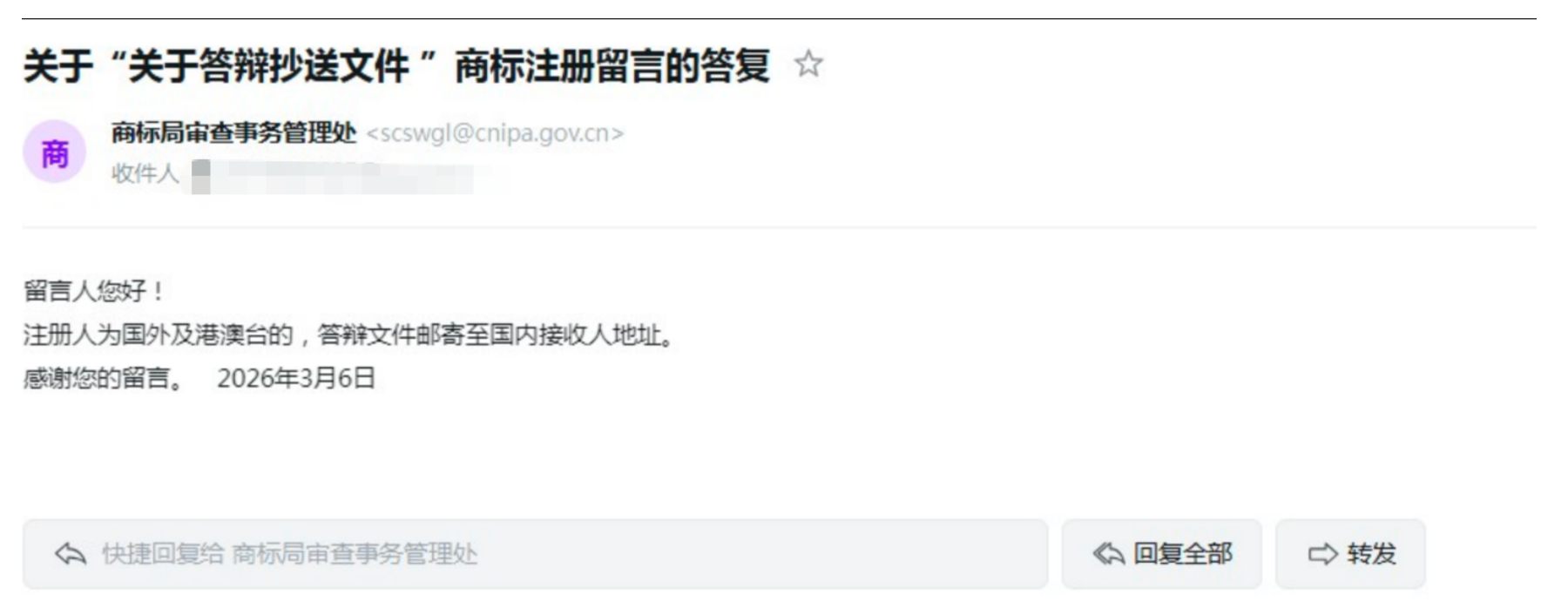
If a Taiwanese company fails to properly appoint a domestic contact when filing its trademark, it may miss critical notifications—such as a non-use cancellation action or an opposition filing—and lose the opportunity to respond within the statutory deadline. In such cases, the trademark may be revoked without effective defense.
III. Goldkeen’s Professional Approach: Dual Protection Mechanism
To mitigate risks arising from this policy change, Goldkeen has implemented a standardized practice when handling China trademark matters for Taiwanese clients.
From the initial filing stage, we ensure that a valid China domestic contact address is properly designated, so that all official communications can be received without delay.
At the same time, even though CNIPA no longer sends copies to agents, we continue to proactively monitor case status and procedural developments. This dual-layer system helps eliminate information gaps and ensures that our clients remain fully informed at every stage.
Conclusion
The removal of agent copy service reflects a broader trend in China’s trademark system: placing greater responsibility on the trademark owner.
In this evolving regulatory environment, the role of a professional trademark firm extends beyond filing applications—it requires precise control over procedural details and risk management.
Through a well-structured domestic contact system and cross-border coordination, Goldkeen ensures that Taiwanese clients can continue to protect their core brand assets effectively, even under the new “no copy to agent” regime.
Need Help with China Trademark Protection?
Goldkeen provides:
- China trademark filing strategy
- Domestic contact setup
- Ongoing monitoring and deadline control
Contact us today to secure your trademark rights in China.